

Introduction
Parkinson’s disease (PD) is a progressive neurodegenerative movement disorder that impacts over 10 million people globally. Despite substantial advances in the last several decades that have uncovered mechanisms contributing to PD (Figure 1), our understanding of disease etiology, progression, and treatment is far from complete. While PD can be caused by a single variant in one gene, the vast majority (90-95%) of cases arise from a combination of genetic and environmental factors.1 In these cases, the contribution of genetic variants to disease burden is unclear, as known risk loci explain only ~25% of PD heritability.2 Moreover, PD is heterogeneous both in genetic origin and in clinical manifestation: in addition to the core movement symptoms that define the current diagnostic criteria, individuals with PD may experience sleep disorders, loss of smell, inflammation, constipation, depression, and cognitive impairment. The occurrence, severity, and timing of these non-motor symptoms can vary widely between individuals, with some occurring years before clinical diagnosis. Symptom variability may be linked to variability in the genetic basis of the disease, which would elevate a precision medicine approach for PD treatment. However, current precision medicine is limited by gaps in our understanding of the genetic variability of PD. To further our understanding of the relationship between genetics, symptoms, and progression of PD, and to develop treatments that address the full spectrum of the disease, a more comprehensive analysis of genetic variance across the human population is needed.
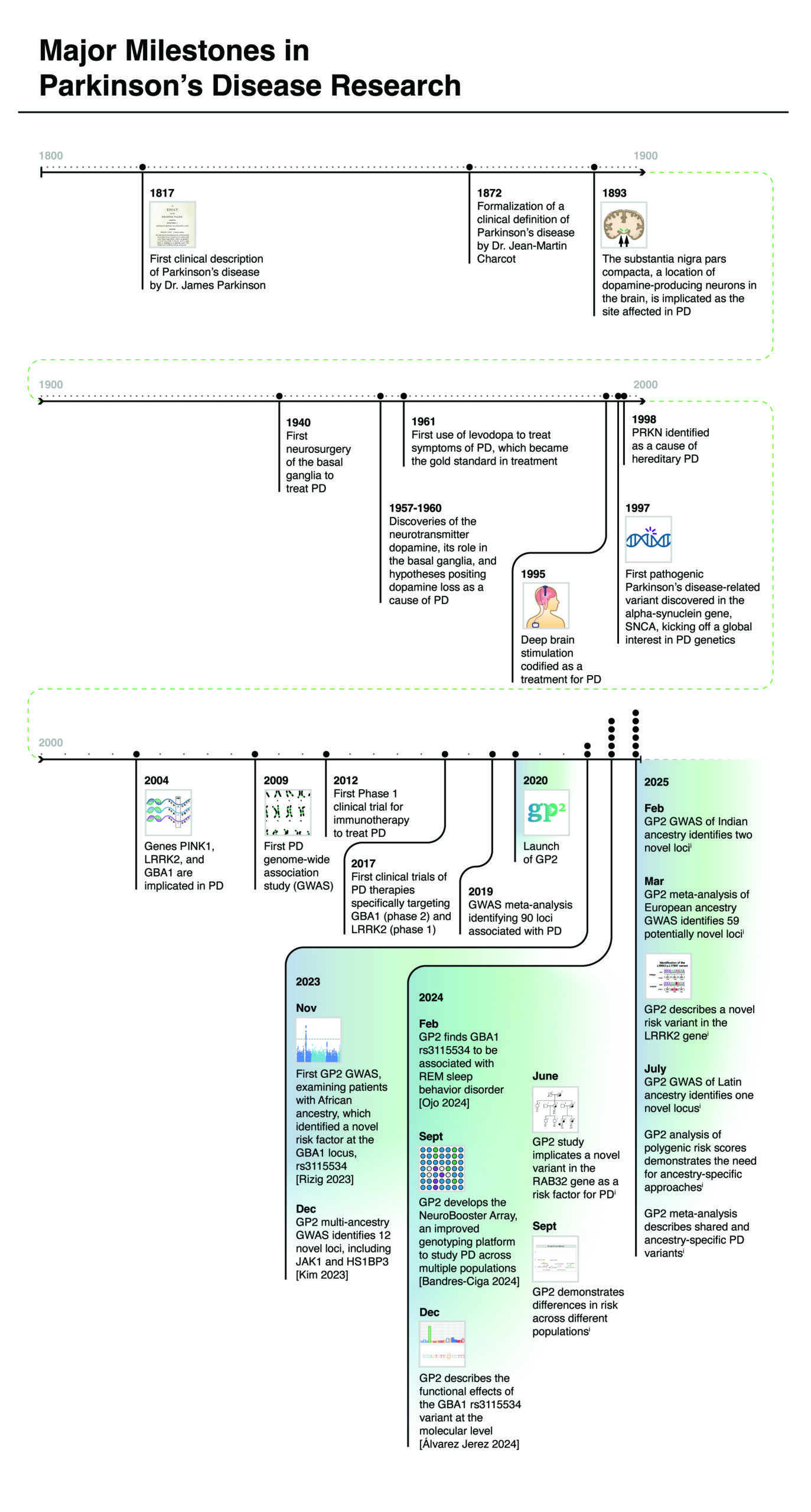
Figure 1. Timeline of major milestones in Parkinson’s research.
Despite the well-recognized genetic and clinical heterogeneity of PD, only 4.8% of PD research studies since the turn of the century have included analysis of genetic ancestry.3 Additionally, most genetic studies are not representative of the global population, consisting of >85% European ancestry.4 This approach biases the search for PD-associated genetic variants to a small slice of human variation. Studying individuals of non-European ancestry will strengthen the scientific understanding of PD across global populations and accelerate the pace of discovery by providing a treasure trove of unexamined genetic data, which may be the key to the future of PD treatments. Diversifying PD genetics research will facilitate mapping of clinical variability, define disease subtypes, and improve treatment outcomes for all PD patients.
Global Parkinson’s Genetics for Global Treatment
Recruiting global participation in research discovery requires an intentionally designed research program committed to capacity building through active collaboration, research training, and development of necessary resources. To this end, the Global Parkinson’s Genetics Program (GP2), a resource program of the Aligning Science Across Parkinson’s initiative managed by the Coalition for Aligning Science and implemented by the Michael J. Fox Foundation for Parkinson’s Research, is both a scientific and infrastructural endeavor. GP2 has established a global coalition of researchers that aims to genotype over 250,000 volunteers worldwide to expand understanding of the diversity of PD genetic causes, risk factors, and clinical presentations. This is the largest PD genetics effort to date, bringing together over 400 cohorts that are recruiting participants from nearly 300 research centers across more than 60 countries, focusing on regions that have historically not been included in genetic studies.
GP2’s main approach involves establishing worldwide scientific partnerships and distributing resources to amplify local knowledge and address region-specific challenges.5 These partnerships ensure that research practices are sustainable, appropriate, and informed by community perspectives. By developing strong intercontinental research relationships and supporting the development of scientific resources where they are most needed, GP2 enables global participation in genetic research through local community networks, ensuring that research outcomes benefit those communities. In the process, GP2 empowers local communities to maintain agency over how their data is used, and in return, expands its research capability from local capacity on the ground.
GP2 investments in infrastructural development and support take several forms, including regional workshops, networking platforms, training initiatives, and free virtual courses in up to 100 languages. To overcome financial barriers to sharing resources, GP2 funds master’s and PhD programs, visiting fellowships, and sabbaticals, enabling trainees and early-career scientists across the globe to conduct collaborative research. GP2 also supports the development of laboratory infrastructure and research tools that enable genotyping of worldwide populations, such as the NeuroBooster Array,6 which provides an alternative genotyping array to those optimized for European ancestry, and the establishment of a DNA extraction laboratory in Lagos, Nigeria and a biobank in Lima, Peru to address major barriers to local participation by reducing shipping costs and study time.
Together, these approaches enable GP2 to involve a wider network of researchers and participants, facilitating greater and more efficient discovery. By actively diversifying genetic analyses, GP2’s approach has enabled the detection of several novel risk variants in multiple loci across different populations, and researchers are beginning to link these variants to specific PD symptoms, paving the way for improved treatment. Here, we highlight three of GP2’s contributions to the field of PD research: GP2 has 1) identified novel regions associated with PD risk, 2) elucidated differences in risk factors and associated symptoms across ancestral groups, and 3) revealed promising molecular candidates for future targeted therapeutics.
Populations that have been historically underrepresented in PD genetics research likely carry yet-undiscovered risk variants at a more detectable rate, alerting researchers to novel risk loci that would have otherwise been missed in European populations. Furthermore, amassing larger sample sizes, regardless of the genetic background, provides the statistical power to assess risk variants that may have a smaller, but still significant, effect on disease etiology. GP2 took this approach in one of the first multi-ancestry meta-analyses in the field, which assessed over 49,000 individuals with PD and over 2 million unaffected participants across European, East Asian, Latin American, and African cohorts.7 This analysis revealed 12 previously undetected loci as potential risk factors for PD, two of which, JAK1 and HS1BP3, were found only in Latin American and African populations. Discoveries like these may help provide a genetic basis for poorly understood PD symptoms. For example, genetic variants at the JAK1 locus have been associated with inflammatory and autoimmune disorders like juvenile idiopathic arthritis and multiple sclerosis, so this finding may help clinicians better understand the genetic underpinnings of inflammatory and autoimmune symptoms in PD. This study also identified loci related to mitochondrial function and immune cells, which a previous European-ancestry only meta-analysis failed to detect,2 highlighting the importance of the multi-ancestry approach in generating statistical power to identify additional risk loci. Together, this research broadens our knowledge of cellular pathways that may underlie PD symptoms, which, without data from varied populations, may otherwise have gone undetected.
Including diverse populations in genetic research presents the opportunity to validate known risk variants and examine differential impacts of these variants. A recent GP2 meta-analysis sought to examine the disease burden of known risk variants across ethnic groups by calculating the Population Attributable Risk (PAR), which quantifies the proportion of disease cases that could be prevented if a risk factor were removed from a population.8 Assessing 90 different PD risk variants, they found variable PAR scores across populations, implying that different variants convey different levels of risk across ancestral groups. For example, the MAPT locus, which has been implicated in dementia, appeared as a top risk factor only in Latino and European groups; a variant at the HLA-DRB5 locus associated with PD-related inflammatory bowel disease had the highest estimated PAR for the East Asian population; and GBA1 variants, discussed below, were identified as the top PAR signals in the African genetic ancestry group. These nuanced findings may help explain differences in symptom manifestation across groups, as, for example, gastrointestinal symptoms are more common in East Asian populations.9 More work is needed to understand the heterogeneity of symptom presentation across populations and the associations between risk loci and symptoms, but GP2 analyses have demonstrated the critical need for increased diversity in genetic research to improve diagnostic accuracy and ensure the equitable development of precision medicine therapies for all populations.10
Investigating how variants in a gene alter cellular products, and the functional consequences of those altered products, provides a starting point for the development of targeted therapeutics. GP2’s work on the GBA1 gene, which encodes the lysosomal enzyme glucocerebrosidase involved in glycolipid breakdown and has been strongly implicated in PD, showcases impressive progress toward this goal in just a few short years. A recent GP2 study examining individuals of African ancestry found, strikingly, that known GBA1 variants associated with PD risk in Ashkenazi Jewish and European populations did not appear in the African cohort. Instead, researchers identified four novel risk variants and 14 rare GBA1 variants that are the most frequent PD-associated variants in individuals of African descent,11 highlighting the range of risk variants within the same gene. Another study of the GBA1 locus identified a novel GBA1 risk variant, rs3115534-G, present in 39% of assessed West African ancestry PD cases but that was not previously identified in European populations, suggesting that risk variants may have different impacts on patients across populations.12 The implications of this work extend into the clinical realm: a subsequent study in a Nigerian cohort of individuals with PD found the rs3115534-G variant to be associated with rapid eye movement sleep behavior disorder (RBD), a symptom linked to dementia and faster PD progression.13 While GBA1 variants across populations have been linked with RBD, further analysis of this particular variant revealed a novel mechanism of action: unlike GBA1 variants in other populations, which result in a dysfunctional enzyme, the rs3115534-G variant results in reduced enzyme production overall.14 By conducting research across all populations, these studies construct a fuller and clearer picture of this particular GBA1 variant, from the discovery of an alternative mechanism for increased disease risk to its associated symptomatic presentation. This work provides a new avenue for future targeted therapeutics in a specific, previously overlooked population for inclusion in GBA1 therapeutic trials.
Global Participation Drives Discovery
been included in genetic research made the discoveries highlighted in this article possible, providing scientists and clinicians with new pathways toward more effective treatment. GP2’s concerted research efforts demonstrate how global participation in PD research can reveal novel risk variants that can be tied to specific symptoms. Findings like these enable researchers and clinicians to strategically narrow down potential disease mechanisms on a case-by-case basis, facilitating more effective treatment and potentially introducing solutions to previously unresolved PD cases across populations. Through a commitment to global participation, GP2 research has identified rare genetic variants, variants of previously unknown clinical significance, and otherwise novel risk factors. GP2’s framework paves the way for continued expansion and ethical engagement in global research that, over time, will enable development of targeted therapeutics and increased access to care, providing more effective treatment for patients across the world. Global data collection has already facilitated new directions for clinical progress, yielding insights into clinical variability, disease subtypes, and new mechanisms of action for risk factors. As GP2 continues to bridge the gap between genetic diversity and clinical insight, the program is proving that the key to unlocking the complexities of Parkinson’s disease lies not in a single population, but in the collective data of the entire world.
GP2’s main approach involves establishing worldwide scientific partnerships and distributing resources to amplify local knowledge and address region-specific challenges.5 These partnerships ensure that research practices are sustainable, appropriate, and informed by community perspectives. By developing strong intercontinental research relationships and supporting the development of scientific resources where they are most needed, GP2 enables global participation in genetic research through local community networks, ensuring that research outcomes benefit those communities. In the process, GP2 empowers local communities to maintain agency over how their data is used, and in return, expands its research capability from local capacity on the ground.
GP2 investments in infrastructural development and support take several forms, including regional workshops, networking platforms, training initiatives, and free virtual courses in up to 100 languages. To overcome financial barriers to sharing resources, GP2 funds master’s and PhD programs, visiting fellowships, and sabbaticals, enabling trainees and early-career scientists across the globe to conduct collaborative research. GP2 also supports the development of laboratory infrastructure and research tools that enable genotyping of worldwide populations, such as the NeuroBooster Array,6 which provides an alternative genotyping array to those optimized for European ancestry, and the establishment of a DNA extraction laboratory in Lagos, Nigeria and a biobank in Lima, Peru to address major barriers to local participation by reducing shipping costs and study time.
Together, these approaches enable GP2 to involve a wider network of researchers and participants, facilitating greater and more efficient discovery. By actively diversifying genetic analyses, GP2’s approach has enabled the detection of several novel risk variants in multiple loci across different populations, and researchers are beginning to link these variants to specific PD symptoms, paving the way for improved treatment. Here, we highlight three of GP2’s contributions to the field of PD research: GP2 has 1) identified novel regions associated with PD risk, 2) elucidated differences in risk factors and associated symptoms across ancestral groups, and 3) revealed promising molecular candidates for future targeted therapeutics.
References
- Blauwendraat, C., Nalls, M. A., & Singleton, A. B. (2020). The genetic architecture of Parkinson’s disease. The Lancet. Neurology, 19(2), 170–178. https://doi.org/10.1016/S1474-4422(19)30287-X
- Nalls, M. A., Blauwendraat, C., Vallerga, C. L., Heilbron, K., Bandres-Ciga, S., Chang, D., Tan, M., Kia, D. A., Noyce, A. J., Xue, A., Bras, J., Young, E., von Coelln, R., Simón-Sánchez, J., Schulte, C., Sharma, M., Krohn, L., Pihlstrøm, L., Siitonen, A., Iwaki, H., … International Parkinson’s Disease Genomics Consortium (2019). Identification of novel risk loci, causal insights, and heritable risk for Parkinson’s disease: a meta-analysis of genome-wide association studies. The Lancet. Neurology, 18(12), 1091–1102. https://doi.org/10.1016/S1474-4422(19)30320-5
- Siddiqi, S., Ortiz, Z., Simard, S., Li, J., Lawrence, K., Redmond, M., Tomlinson, J. J., Schlossmacher, M. G., & Salmaso, N. (2025). Race and ethnicity matter! Moving Parkinson’s risk research towards diversity and inclusiveness. NPJ Parkinson’s disease, 11(1), 45. https://doi.org/10.1038/s41531-025-00891-7
- Mills, M. C., & Rahal, C. (2020). The GWAS Diversity Monitor tracks diversity by disease in real time. Nature genetics, 52(3), 242–243. https://doi.org/10.1038/s41588-020-0580-y
- Blauwendraat, C., Noyce, A. J., Mata, I. F., Screven, L. A., Solle, J., Dumanis, S. B., Riley, E. A., Periñan, M. T., Okubadejo, N., Klein, C., Morris, H. R., Singleton, A. B., & Global Parkinson’s Genetics Program (GP2) (2025). Tackling a disease on a global scale, the Global Parkinson’s Genetics Program, GP2: A new generation of opportunities. American journal of human genetics, S0002-9297(25)00284-8. Advance online publication. https://doi.org/10.1016/j.ajhg.2025.07.014
- Bandres-Ciga, S., Faghri, F., Majounie, E., Koretsky, M. J., Kim, J., Levine, K. S., Leonard, H., Makarious, M. B., Iwaki, H., Crea, P. W., Hernandez, D. G., Arepalli, S., Billingsley, K., Lohmann, K., Klein, C., Lubbe, S. J., Jabbari, E., Saffie-Awad, P., Narendra, D., Reyes-Palomares, A., … Global Parkinson’s Genetics Program (GP2) and the Center for Alzheimer’s and Related Dementias (CARD) (2024). NeuroBooster Array: A Genome-Wide Genotyping Platform to Study Neurological Disorders Across Diverse Populations. Movement disorders : official journal of the Movement Disorder Society, 39(11), 2039–2048. https://doi.org/10.1002/mds.29902
- Kim, J. J., Vitale, D., Otani, D. V., Lian, M. M., Heilbron, K., 23andMe Research Team, Iwaki, H., Lake, J., Solsberg, C. W., Leonard, H., Makarious, M. B., Tan, E. K., Singleton, A. B., Bandres-Ciga, S., Noyce, A. J., Global Parkinson’s Genetics Program (GP2), Blauwendraat, C., Nalls, M. A., Foo, J. N., & Mata, I. (2024). Multi-ancestry genome-wide association meta-analysis of Parkinson’s disease. Nature genetics, 56(1), 27–36. https://doi.org/10.1038/s41588-023-01584-8
- Jones, L., Cerquera-Cleves, C., Schuh, A. F., Makarious, M. B., Iwaki, H., Nalls, M. A., Noyce, A. J., Global Parkinson’s Genetics Program (GP2), Blauwendraat, C., Singleton, A., Mata, I., & Bandres-Ciga, S. (2024). Multi-ancestry population attributable risk assessment of common genetic variation in Alzheimer’s and Parkinson’s diseases. medRxiv : the preprint server for health sciences, 2024.09.23.24314240. https://doi.org/10.1101/2024.09.23.24314240
- Ben-Joseph, A., Marshall, C. R., Lees, A. J., & Noyce, A. J. (2020). Ethnic Variation in the Manifestation of Parkinson’s Disease: A Narrative Review. Journal of Parkinson’s disease, 10(1), 31–45. https://doi.org/10.3233/JPD-191763
- Lange, L. M., Fang, Z. H., Makarious, M. B., Kuznetsov, N., Brolin, K. A., Ballard, S., Bardien, S., Doquenia, M. L., Heutink, P., Houlden, H., Iwaki, H., Jasaityte, S., Jones, L., Junker, J., Kaiyrzhanov, R., Koretsky, M. J., Kumar, K. R., Latin American Research Consortium on the Genetics of Parkinson’s Disease (LARGE-PD), Leonard, H. L., Levine, K. S., … Global Parkinson’s Genetics Program (GP2) (2025). The Global Landscape of Genetic Variation in Parkinson’s disease: Multi-Ancestry Insights into Established Disease Genes and their Translational Relevance. medRxiv : the preprint server for health sciences, 2025.07.08.25330815. https://doi.org/10.1101/2025.07.08.25330815
- Akçimen, F., Paquette, K., Crea, P. W., Saffie-Awad, P., Achoru, C., Taiwo, F., Ozomma, S., Onwuegbuzie, G., Khani, M., Grant, S., Owolabi, L., Okereke, C., Oshinaike, O., Iwuozo, E., Lee, P. S., Oyakhire, S., Osemwegie, N., Daida, K., Abubakar, S., Olusanya, A., … Bandres-Ciga, S. (2025). Large-scale genetic characterization of Parkinson’s disease in the African and African admixed populations. medRxiv : the preprint server for health sciences, 2025.01.14.25320205. https://doi.org/10.1101/2025.01.14.25320205
- Rizig, M., Bandres-Ciga, S., Makarious, M. B., Ojo, O. O., Crea, P. W., Abiodun, O. V., Levine, K. S., Abubakar, S. A., Achoru, C. O., Vitale, D., Adeniji, O. A., Agabi, O. P., Koretsky, M. J., Agulanna, U., Hall, D. A., Akinyemi, R. O., Xie, T., Ali, M. W., Shamim, E. A., Ani-Osheku, I., … Global Parkinson’s Genetics Program (2023). Identification of genetic risk loci and causal insights associated with Parkinson’s disease in African and African admixed populations: a genome-wide association study. The Lancet. Neurology, 22(11), 1015–1025. https://doi.org/10.1016/S1474-4422(23)00283-1
- Ojo, O. O., Bandres-Ciga, S., Makarious, M. B., Crea, P. W., Hernandez, D. G., Houlden, H., Rizig, M., Singleton, A. B., Noyce, A. J., Nalls, M. A., Blauwendraat, C., Okubadejo, N. U., & Nigeria Parkinson’s Disease Research Network and the Global Parkinson’s Genetics Program (GP2) (2024). GBA1 rs3115534 Is Associated with REM Sleep Behavior Disorder in Parkinson’s Disease in Nigerians. Movement disorders : official journal of the Movement Disorder Society, 39(4), 728–733. https://doi.org/10.1002/mds.29753
- Álvarez Jerez, P., Wild Crea, P., Ramos, D. M., Gustavsson, E. K., Radefeldt, M., Damianov, A., Makarious, M. B., Ojo, O. O., Billingsley, K. J., Malik, L., Daida, K., Bromberek, S., Hu, F., Schneider, Z., Surapaneni, A. L., Stadler, J., Rizig, M., Morris, H. R., Pantazis, C. B., Leonard, H. L., … Blauwendraat, C. (2024). African ancestry neurodegeneration risk variant disrupts an intronic branchpoint in GBA1. Nature structural & molecular biology, 31(12), 1955–1963. https://doi.org/10.1038/s41594-024-01423-2
Resources
- https://gp2.org/outputs-catalog/
Figure Legends
- Figure 1. Timeline of major milestones in Parkinson’s research.
i. https://gp2.org/outputs-catalog/