In 2019, the Global Parkinson’s Genetics Program (GP2), a resource program of the Aligning Science Across Parkinson’s (ASAP) initiative, set out with a bold mission: to map the global architecture of Parkinson’s Disease (PD). For too long, that map had a massive blind spot—the African continent.
That changed in 2023 when researchers identified a new genetic risk variant for Parkinson’s in West African patients that was previously undetected in European populations. In January 2026, that discovery came «full circle» with the formal commissioning of the GP2-College of Medicine University of Lagos (CMUL) Molecular Laboratory for Parkinson’s Disease Research at the University of Lagos. This isn’t just a new building; it is the first dedicated molecular facility of its kind in Nigeria. It is a mission-critical resource for the world, enabling local analysis of diverse genetic data necessary to unlock breakthroughs that a Eurocentric model overlooks.
A «Full Circle» Milestone
The launch represents a turning point for the GP2 network, which currently spans 70 countries and over 100,000 study participants. By anchoring this high-tech infrastructure within a world-class Nigerian academic institution, GP2 is enabling more diverse representation in the development of the next generation of Parkinson’s therapies, making ‘precision medicine’ a reality for everyone, everywhere.
As Dr. Ekemini Riley, ASAP’s Founding Managing Director, noted: “This lab demonstrates that we can build GP2-standard molecular infrastructure, staff it with local talent, and drive world-class science from within West Africa. Parkinson’s disease still has no cure — only treatments that ease its symptoms — and closing that gap requires us to look broadly. Genetic discovery scales with diversity: more populations, more variants, more biology revealed. The variants that will unlock tomorrow’s drug targets may well exist in populations that have never been systematically studied. This laboratory ensures that West Africa is not just a recipient of scientific progress, but also a generator of it.”
About the Lab: Closing the Research Gap
Located within the Kesington Adebukunola Adebutu Research Centre (KAARC), the lab’s goal is to extract and analyze DNA from Nigerian patients on-site, ensuring that West African ancestry genetic sequences are no longer underrepresented but are instead a driving contributor to global research.
The Research Team
The laboratory is led by Professor Njideka Okubadejo, a Neurologist, Movement Disorders Specialist, Principal Investigator, and one of Africa’s highest-impact neurological researchers. Her vision, persistence, and long-standing international collaborations were central to establishing the necessary infrastructure and scientific credibility for the launch.

Professor Njideka Okubadejo
Driving the operational setup of the lab is Mr. Roosevelt Anyanwu, a molecular scientist who has served as the lead for laboratory structuring, certification, and training, who is currently on sabbatical to ensure the facility is fully operational. The broader team includes Dr. Duni Olusanya, neurologist and GP2 trainee with a PhD in clinical pharmacology who serves as site investigator, and Dr. Oluwadamilola ‘Lara’ Ojo, lead for biologics, biobanking, and sample collection operations, among other critical tasks. Together, the team spans neurology, molecular biology, clinical and laboratory science, providing a strong interdisciplinary foundation for the work ahead.
Laboratory Capabilities and Roadmap
The facility has been purposefully designed with a phased scale-up in mind. In its current phase, the laboratory handles DNA extraction, quality assessment, and biobanking of biological samples. In the near term, the team plans to expand into PCR-based genotyping and begin collaborating on genome-wide association studies. The long-term vision is to establish on-site full next-generation sequencing (NGS) capability, consolidating the entire research pipeline from sample to sequence within the facility.
All processes are being implemented in alignment with international quality standards, ensuring that data generated here will meet the requirements of the global GP2 network.
As Professor Okubadejo stated, the team is fully aligned with ASAP’s mission to “accelerate the pace of discovery and improve the path to a cure for Parkinson’s disease through collaboration, research-enabling resources, and data sharing.”
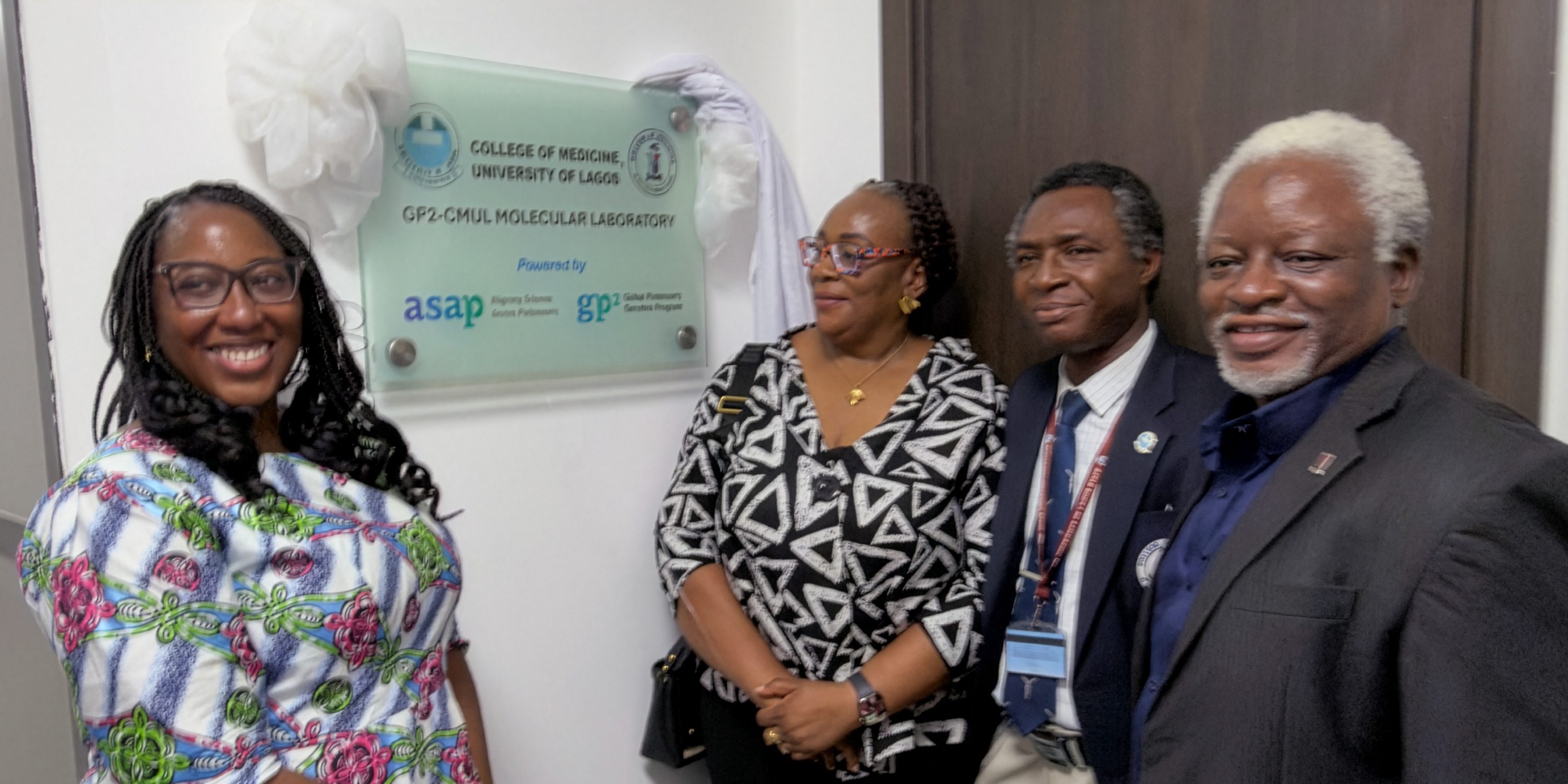
Official unveiling of the molecular laboratory
Training the Next Generation of Scientists
A core priority of the new laboratory is training. Students rotating through the facility will receive stipends to support their participation, removing financial barriers to access. In the medium and longer term, the team plans to expand formal training and capacity-building programs for researchers and aspiring researchers in the field, positioning the lab as a hub for scientific development in Nigeria.
This commitment to training reflects the broader GP2 mission. As CMUL’s leadership noted, talent is not the constraint in Nigeria; it is the platform and opportunity. The new laboratory creates both.
Final Thoughts
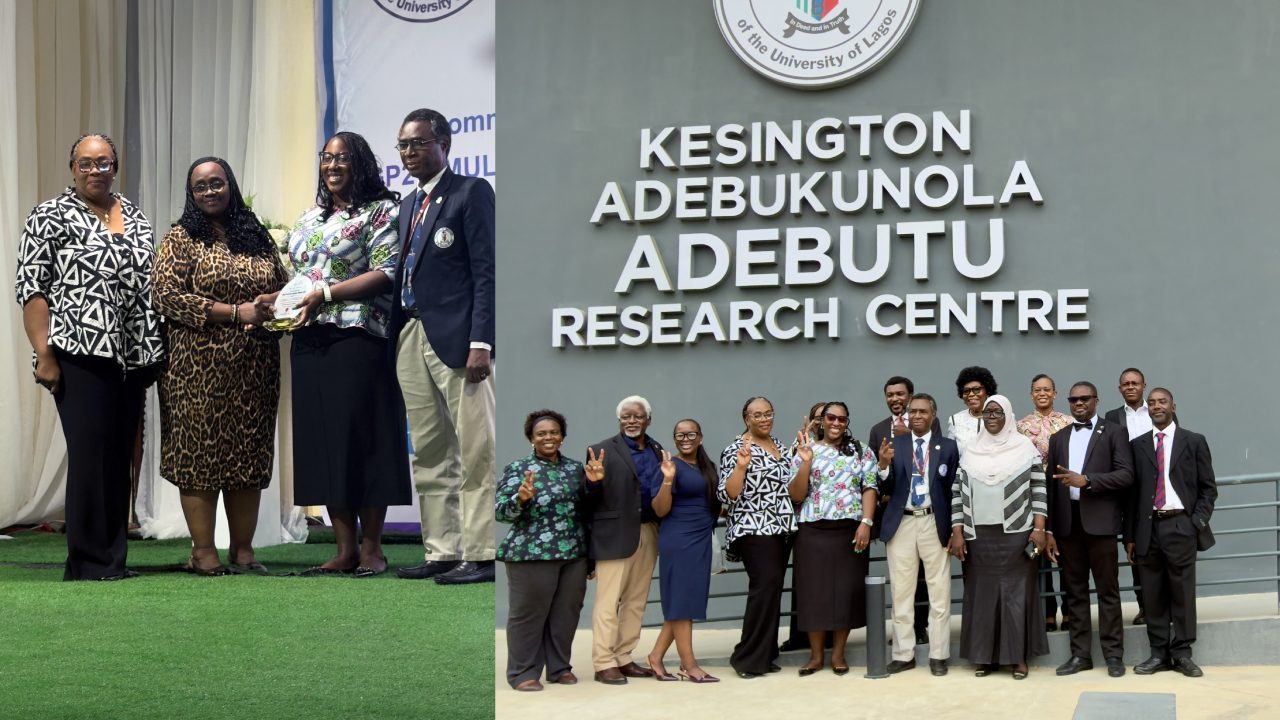
The opening of the laboratory united leadership from the University of Lagos and CMUL alongside Nigerian clinicians, scientists, and key partners. Notable attendees included members of Parkinson’s Africa, the Adewunmi Desalu Parkinson’s Disease Foundation, and the Coalition for Aligning Science (CAS), which manages the ASAP initiative. Attendees witnessed firsthand how GP2’s global mission translates into locally rooted scientific infrastructure.
The new GP2-CMUL Molecular Laboratory for Parkinson’s Research represents years of dedication by Professor Okubadejo and her team, who built the capacity, credibility, and collaborative networks required to bring this facility to life. The team is proud to see it established in Lagos and hopes it will serve as a model to be replicated across Nigeria and the wider continent. With this vital infrastructure in place, the path to accelerating discovery—and ultimately finding a cure for Parkinson’s disease—becomes clearer for everyone.
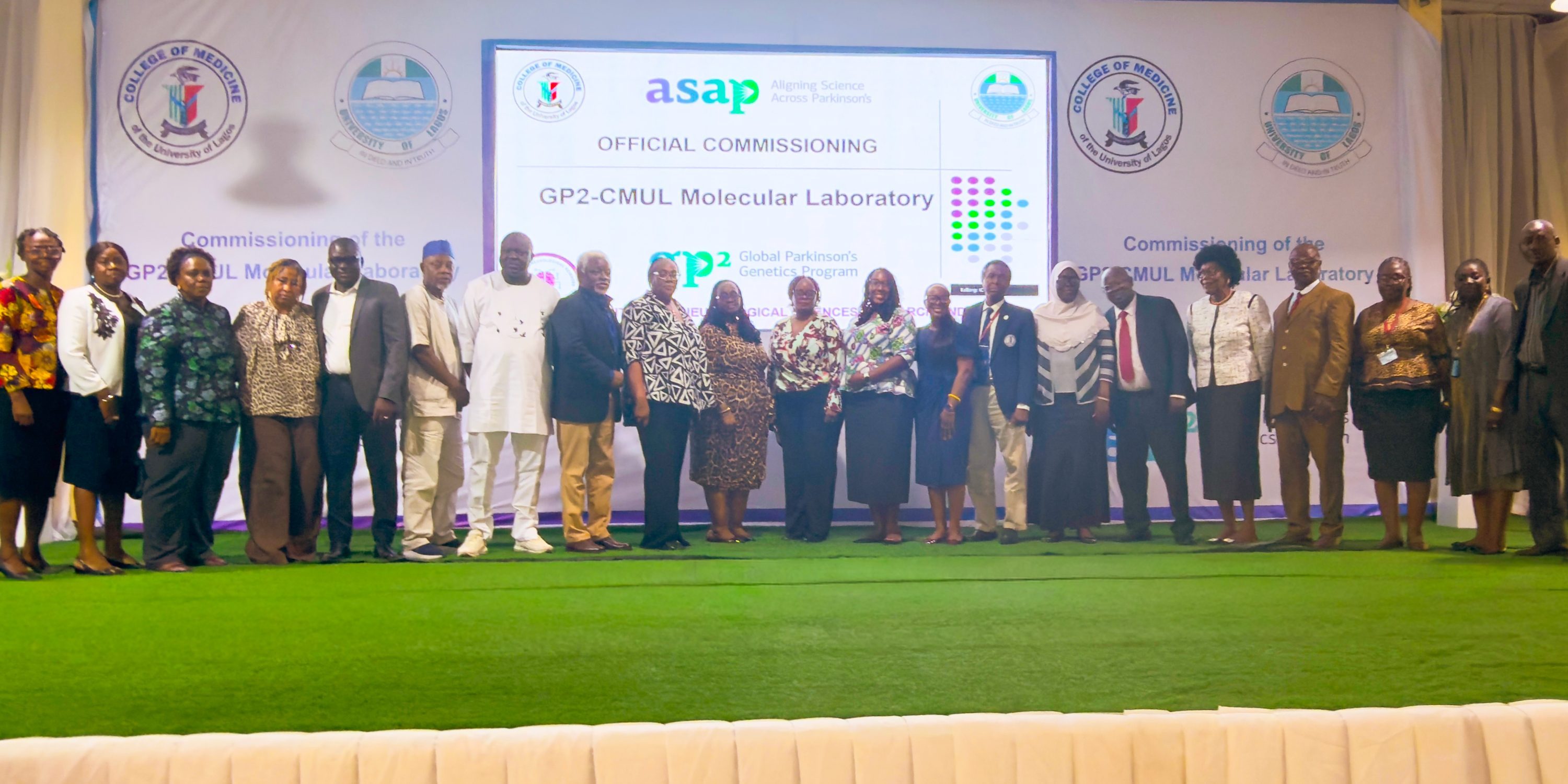
Attendees of the pre-commissioning seminar, key members of the university leadership, and CAS