In order to share knowledge across nations and train the next generation of global researchers, hands-on, cross-cultural experience is necessary. The GP2 Visiting Scientist Program is designed to support global collaborations between researchers and clinicians, providing early-career scientists with the opportunity to visit leading institutions in Parkinson’s disease and movement disorder research, develop new research avenues, and establish partnerships that extend well beyond a single visit.
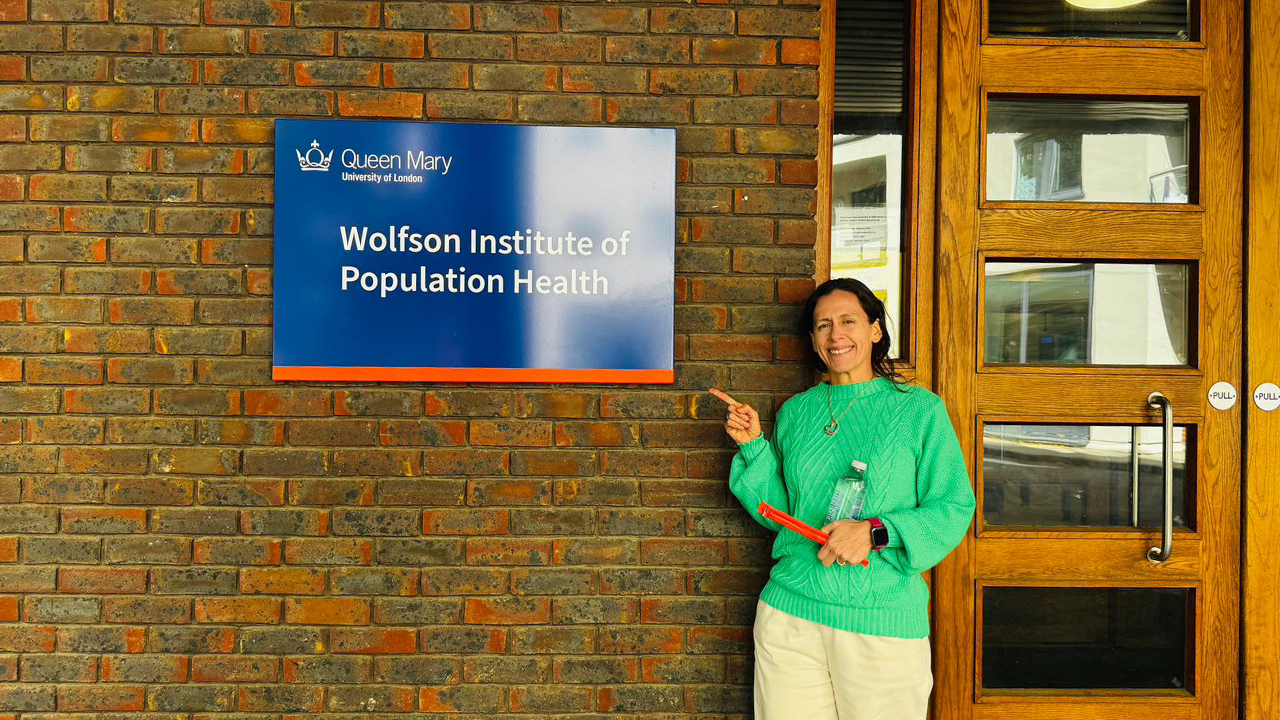
My name is Beatriz Muñoz Ospina, and I am a neuropsychologist at Fundación Valle del Lili in Cali, Colombia, where I conduct research on movement disorders and other neurodegenerative diseases such as Alzheimer’s disease. As a participant in the program, I had the opportunity to visit Queen Mary University of London (QMUL) in the UK, where I was able to explore how London’s diverse population influences health outcomes. While cognition has always been a central focus of my work, I have become increasingly interested in understanding how social factors and cultural differences influence cognitive health and cognitive assessment across populations.
This interest led me to become involved in collaborative initiatives across Latin America. In 2024, during the LARGE-PD Consortium meeting held in Lima, Peru, colleagues from Mexico, Argentina, Chile, El Salvador, Brazil, and Colombia came together to establish the Cognition Working Group. Our goal is to better understand the realities of cognitive assessment in Latin America, particularly in research settings and primary healthcare. Factors such as unequal access to healthcare, limited time for clinical evaluations, and the growing burden of Parkinson’s disease present unique challenges. These realities have encouraged us to rethink how cognition is assessed and understood in Latin American populations. Promoting brain health and improving cognitive evaluation for people living with Parkinson’s disease has become an increasingly urgent priority.
With these goals in mind, I applied to the GP2 Visiting Scientist Program to learn how cognition is studied in other populations around the world. During my visit to QMUL, I had the privilege of working with the multicultural research team led by Professor Alastair Noyce, whose research focuses on Parkinson’s disease and other neurodegenerative disorders, with a particular emphasis on early identification and the environmental, clinical, and genetic determinants of disease. In regular discussions with the group, we explored the social, cultural, and clinical factors influencing cognition and Parkinson’s disease research across diverse populations, including those in East London, Dhaka, and Pakistan. One of the most valuable aspects of my visit was learning about large datasets and the process of data harmonization, which plays a crucial role in collaborative research by ensuring that data collected across different sites and populations can be combined and analyzed consistently. It was my first opportunity to see what happens behind the scenes of research, and it gave me a new appreciation for the work required to conduct global studies.
I am a member of the GP2 Trainee Network and, since 2025, have also been involved in the Underrepresented Populations Working Group (URP WG). These experiences have helped me develop a broader understanding of cognition in underserved and underrepresented populations while strengthening my data analysis skills through the GP2 Learning Platform. I hope that sharing my experience will encourage other early-career researchers to become involved in the GP2 Trainee Network and take advantage of the opportunities it offers, such as the Visiting Scientist Program.
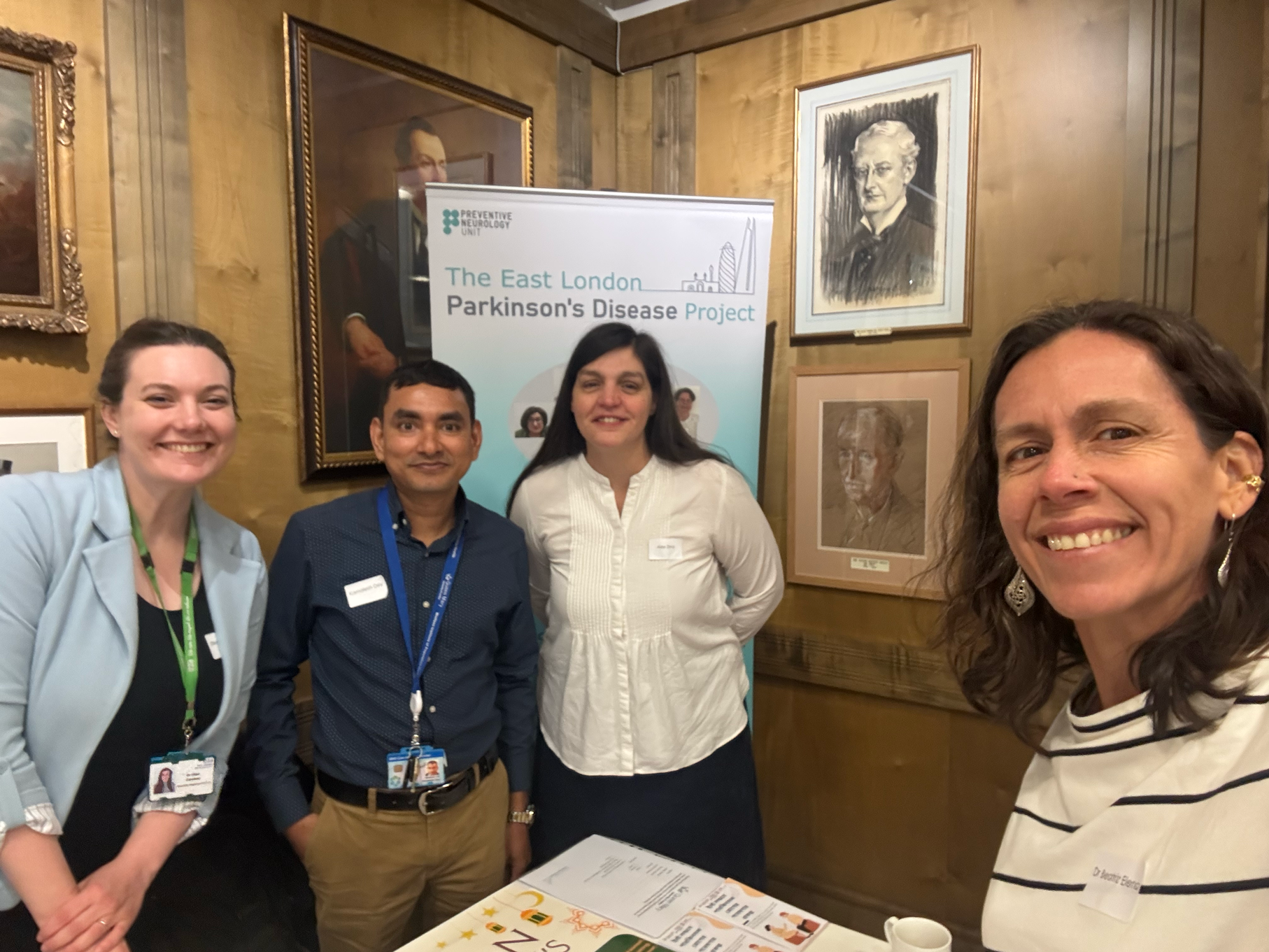
The connections I developed during my visit have continued well beyond the placement itself. Through this collaboration, I am now working on two key initiatives. First, we are analyzing the determinants of cognitive performance to identify strategies that promote brain health in underrepresented populations. Second, we are exploring approaches to patient and public involvement (PPI) to enhance participation and recruitment in research studies worldwide. By bringing together experiences from East London, Dhaka, Pakistan, and Colombia, we identified a shared framework for community engagement that can be adapted to different cultural settings, from social media campaigns and community training programs in Pakistan to rural educational initiatives in Colombia. This collaborative work is expected to result in a publication later this year. Our work is just beginning, and I am grateful for this opportunity to contribute to this growing global effort to improve the lives of people living with Parkinson’s disease.