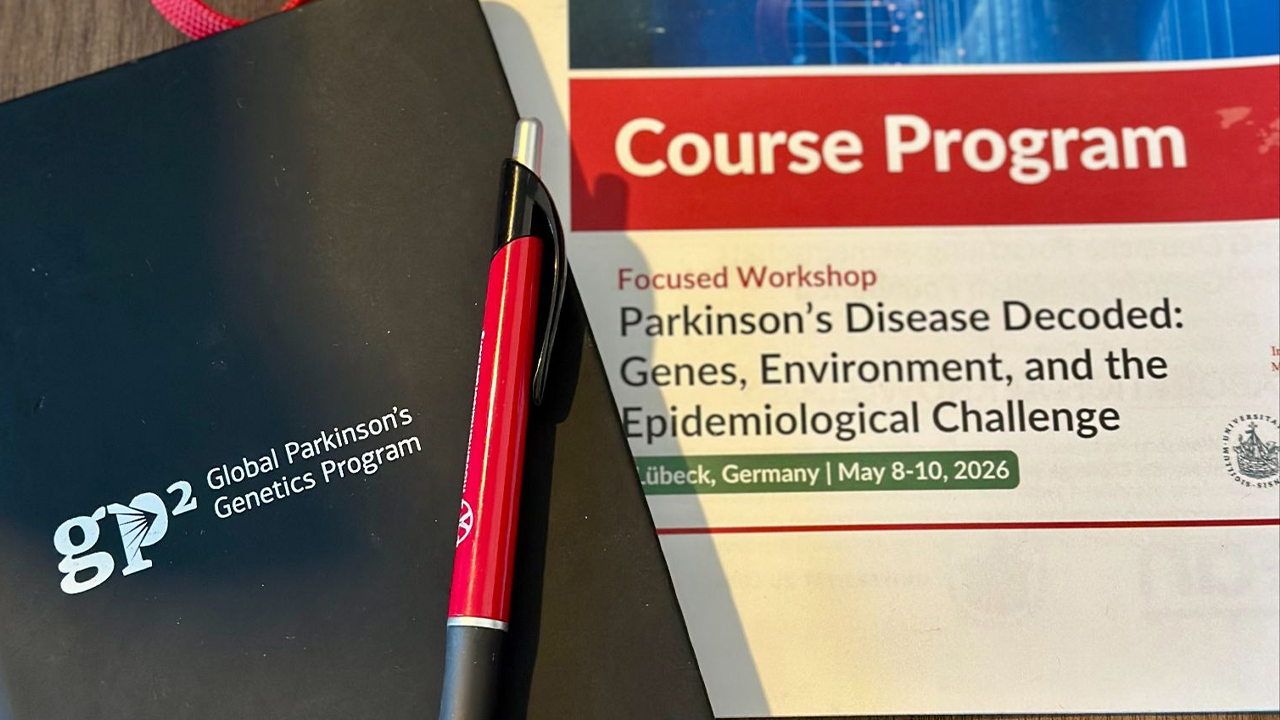
From May 8-10, 2026, seven GP2 trainees attended the International Parkinson and Movement Disorder Society – European Section (MDS-ES) Focused Workshop, Parkinson’s Disease Decoded: Genes, Environment, and the Epidemiological Challenge in Lübeck, Germany, with attendance supported by the GP2 Training and Networking group. The meeting brought together clinicians and researchers working across Parkinson’s disease genetics, epidemiology, environmental risk factors, biomarkers, and disease mechanisms.
The programme reflected the complexity of Parkinson’s disease research. The opening sessions focused on the growing global burden of Parkinson’s disease, challenges in clinical trials, and the need for better patient stratification and translation from models to human disease. This was followed by sessions on known genetic determinants of Parkinson’s disease, including the worldwide incidence and phenotypic spectrum of Parkinson’s disease genes, genetic and environmental modifiers of LRRK2-associated disease, and modulation of GBA1 penetrance. A joint MDS-ES and European Academy of Neurology (EAN) session highlighted neuroimaging biomarkers and the impact of genetics on neuromodulation therapy.
Across these sessions, a clear theme emerged: Parkinson’s disease cannot be understood through genetics, environment, or clinical features in isolation. What stood out was how often speakers connected these layers—from genetic susceptibility and environmental exposures to inflammation, metabolism, and disease trajectories—and how openly they discussed different interpretations. The atmosphere felt collaborative rather than siloed, with a shared sense of determination to move from increasingly detailed biological insights toward better stratification and, ultimately, more individualized care. For us, one of the most exciting aspects was seeing newer approaches, including exposome-based research and AI-supported trajectory stratification, discussed alongside established genetic and biomarker work.
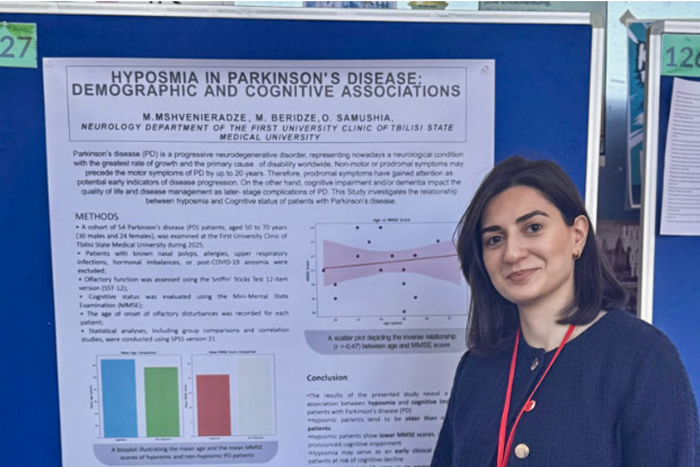
GP2 trainee and one of the authors Mariam Mshvenieradze presents her work at the workshop.
Another highlight was seeing GP2 trainees contribute directly to this broader scientific conversation. Seven GP2-supported trainees from the UK, Romania, Armenia, Georgia, Lithuania, and Slovenia presented projects spanning disease progression, cognition and hyposmia, environmental risk, dementia genetics, candidate genes, and LRRK2 burden analysis. In a focused meeting that brought trainees into discussion with established clinicians and researchers, these posters made the diversity of GP2 especially visible, and highlighted an important aspect of GP2’s approach: smaller, locally grounded projects can address distinct pieces of Parkinson’s disease while contributing to larger collaborative questions. Personally, presenting our work and discussing it with researchers from different disciplines made the value of these connections very tangible and strengthened our motivation to contribute data and perspectives from populations that remain underrepresented in Parkinson’s research.
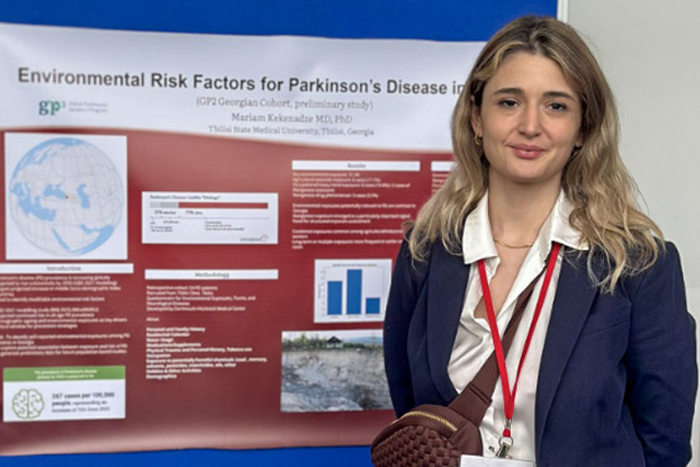
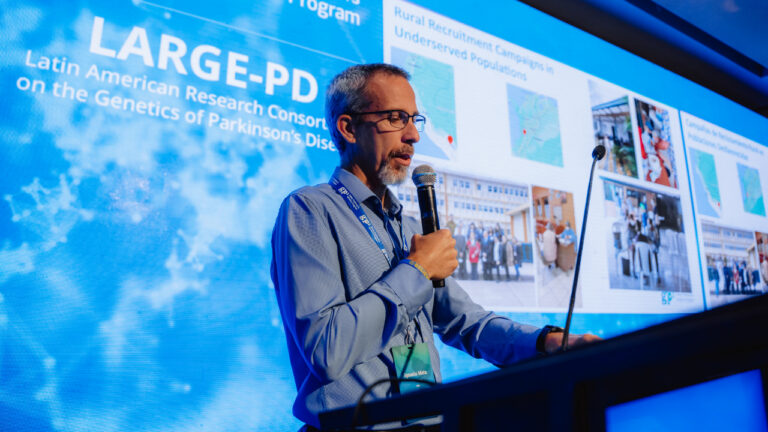
GP2 trainee Miriam Kekenadze presents her work at the workshop.
Beyond the formal scientific sessions, the workshop also offered valuable opportunities for networking and informal discussion. The welcome reception at the Institute of Neurogenetics was a particularly enjoyable part of the meeting, allowing us to connect with colleagues in a more relaxed setting. We were also able to tour the Institute of Neurogenetics, including the clinical deep phenotyping unit with advanced MR imaging facilities, the genetic and genomic screening platform, and the stem cell platform with iPSC-derived neuronal and glial models. Seeing these facilities first-hand highlighted how multidisciplinary Parkinson’s disease research has become, linking clinical phenotyping, genomics, imaging, and experimental disease modelling.
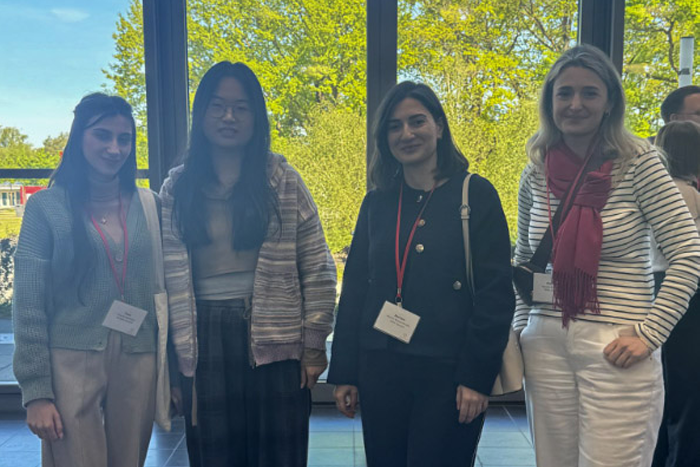
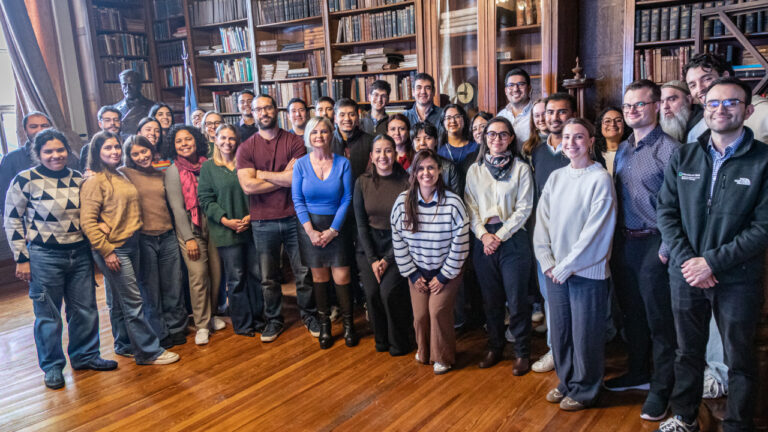
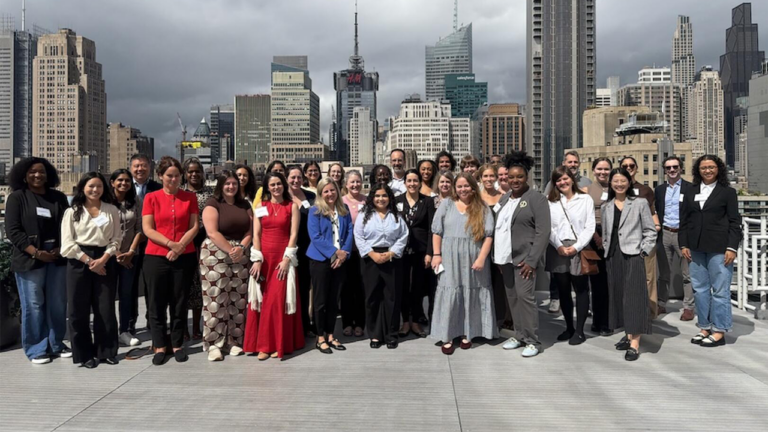
GP2 trainees attend the workshop.
Overall, the workshop was an inspiring experience and reinforced the importance of integrating genetics, environmental factors, biology, and clinical presentation to better understand Parkinson’s disease. For us as GP2 trainees, it was also a reminder that progress depends on connecting individual projects, populations, and disciplines. We left Lübeck with new ideas for interpreting our own work, a stronger appreciation of how complementary approaches can inform one another, and renewed motivation to keep underrepresented populations part of the wider Parkinson’s disease research landscape.