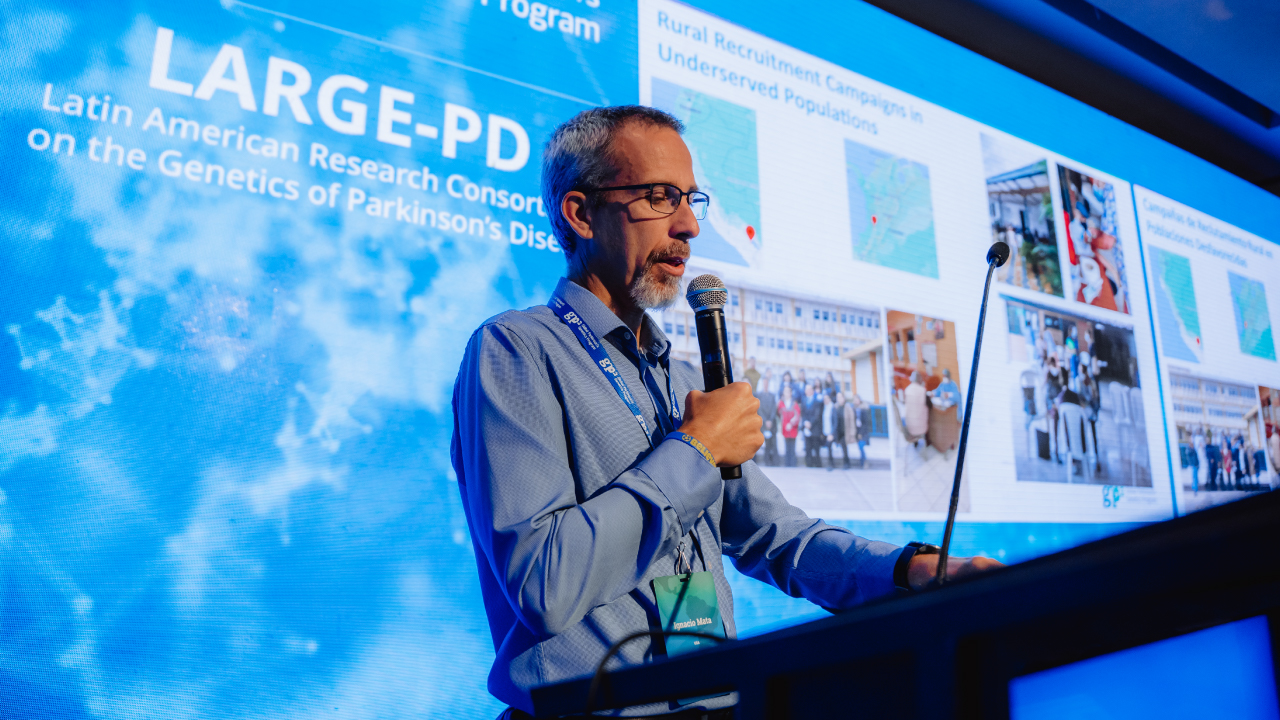
Twenty years ago, a group of researchers came together with a shared goal: to better understand Parkinson’s disease (PD) in Latin America and ensure that people from our region were represented in research. In 2006, that vision became the Latin American Research consortium on the GEnetics of Parkinson’s Disease, or LARGE-PD, a collaboration that began with research sites in Peru and Uruguay. Today, thanks to our collective efforts and the support of the Global Parkinson’s Genetics Program (GP2), LARGE-PD spans 15 countries and more than 10,000 participants, creating an unprecedented foundation for PD research in Latin America.
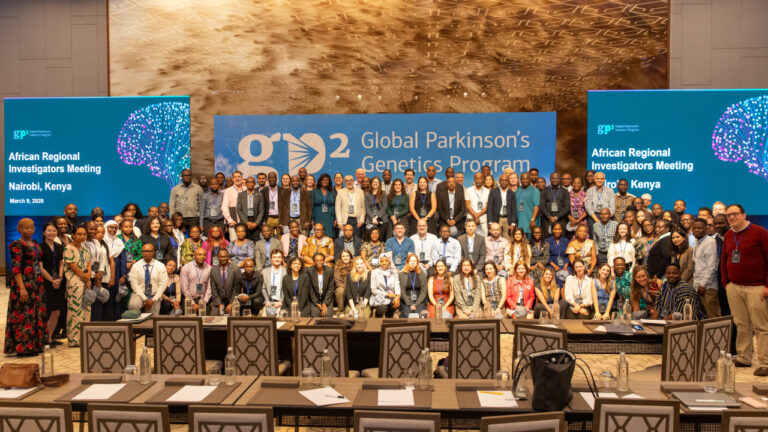
Many of us from the LARGE-PD network gathered to celebrate this milestone at the recent combined GP2 Regional Investigators Meeting and LARGE-PD Annual Investigators Meeting in Uruguay, where we looked back on our early origins and the growth of our network into what it is now. What stood out to me was not only the scientific discoveries we have made, but also something I consider equally important: the community we have built.
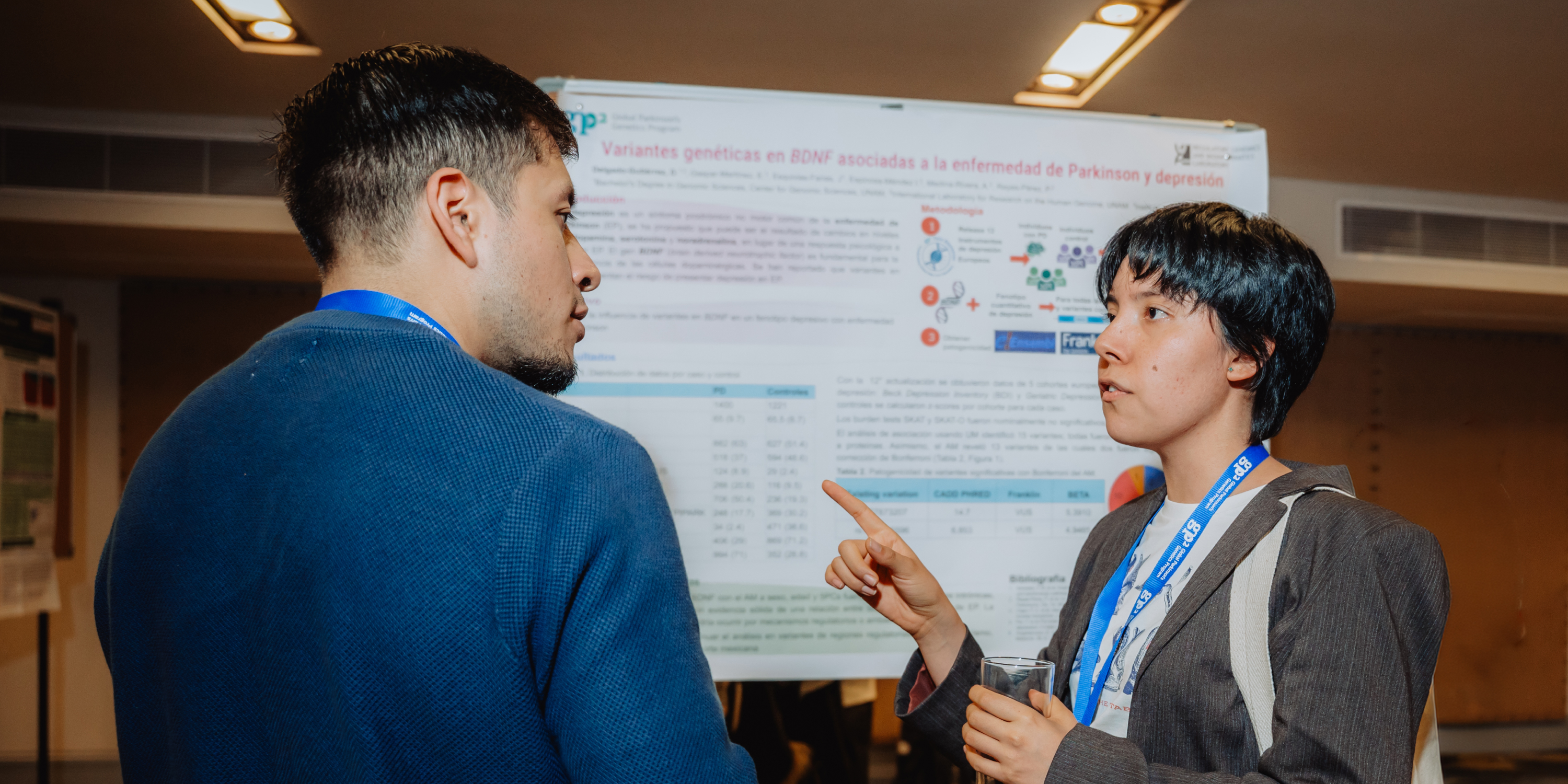
Attendees at the GP2 Regional Investigators Meeting in Uruguay discuss their research.
When LARGE-PD began, there were no dedicated resources; the consortium was created because researchers across the region believed that patients deserved better representation in Parkinson’s research. Many of our early collaborators volunteered their time, offered contributions, and worked relentlessly because they cared deeply about patients and wanted to improve the future of Parkinson’s care.
That spirit remains the foundation of LARGE-PD today.
Historically, researchers in underrepresented regions have often collaborated more frequently with colleagues in North America or Europe than with neighboring institutions. LARGE-PD helped create an environment where partnerships across Latin America could thrive. Over the past two decades, neurologists, geneticists, trainees, and researchers from across the region have come together to share expertise, solve problems, and pursue discoveries that would not have been possible independently.
Through LARGE-PD, we have helped build research capacity across the region. In the early years, training often focused on biobank development and conducting small, local research projects. With GP2’s support, we gained the resources to scale our work, dramatically expanding both patient recruitment and scientific collaborations, and enabling us to access the computational infrastructure local researchers need to run complex analyses. Today, investigators across our network are conducting sophisticated genome-wide association studies (GWAS) or family analyses using data we’ve generated through the consortium. And many of the trainees who joined us early in their careers are now emerging leaders shaping the future of Parkinson’s research in Latin America thanks to GP2’s training program.
 Attendees at the GP2 Regional Investigators Meeting in Uruguay listen to a presentation.
At the same time, we have worked to address a longstanding challenge in Parkinson’s research: representation.
For many years, people of Latin American ancestry were significantly underrepresented in genetic studies. That matters because precision medicine can only be truly effective if the populations who will benefit from it are included in the research that drives discovery. By bringing together sites throughout Latin America, LARGE-PD has helped ensure that Latino populations are represented in efforts to understand the genetic and environmental factors that influence Parkinson’s disease.
This work has produced important scientific findings. Our researchers have helped characterize the frequency of key Parkinson’s-related genetic variants across Latin America, demonstrated how genetic risk factors differ among populations, and conducted some of the first large-scale genome-wide association studies in Latino populations, as well as an X-chromosome-wide association study. We have also examined environmental factors associated with Parkinson’s disease throughout the region and developed analytical approaches specifically designed for Latin American populations. These methods are now helping researchers study diverse populations around the world.
One recent milestone reflects how far the consortium has come. Our first genome-wide association study (GWAS) in 2021 included only 1,500 participants. Through continued growth and support from global collaborators, we have now expanded that effort to roughly 7,000 participants, creating the largest Parkinson’s genetics study ever conducted in Latin American populations. That work identified a potentially causal Parkinson’s disease risk variant in ITPKB that is particularly common in Latin American populations but nearly absent in Europeans, demonstrating how studying diverse populations can uncover genetic risk factors that may be missed in predominantly European studies.
While these discoveries are exciting, I believe the greatest impact of LARGE-PD is felt by the people we serve.
Participation in research has opened new opportunities for patients across the region, including access to genetic testing and education. Patients are becoming increasingly knowledgeable about genetics and Parkinson’s disease, and communities are becoming more connected.
I have seen this change firsthand. When I travel throughout the region, I often meet patients who can discuss genetic findings and understand how various genes (i.e., GBA1 or LRRK2) may influence Parkinson’s disease. Twenty years ago, many people had little exposure to these concepts. Today, patients are asking informed questions, participating in research, and helping drive the conversation forward – showing how empowering representative research can be.
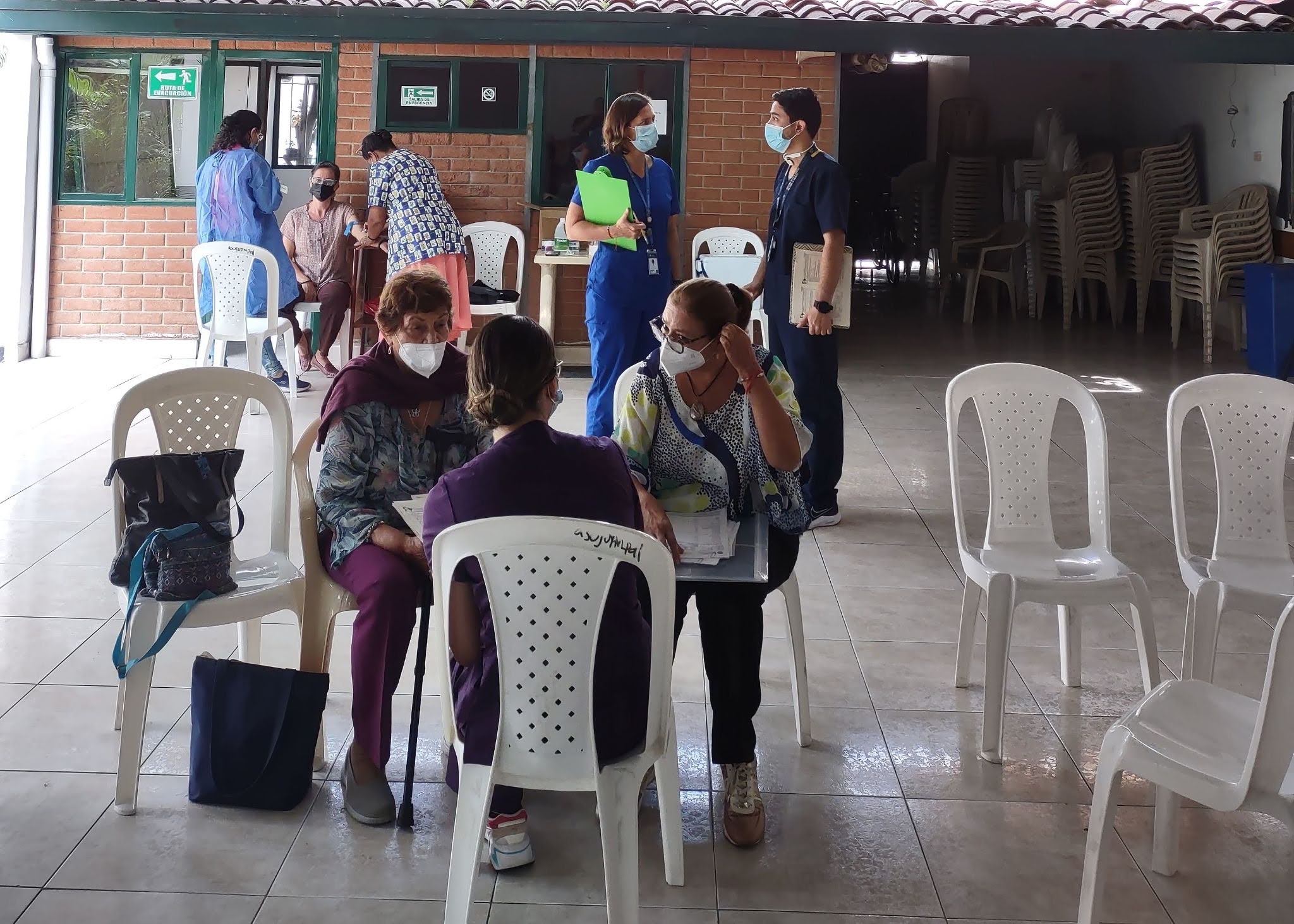
Patient outreach at a community health hub in Palmira, Colombia (March 2022).
LARGE-PD is also working to ensure that no communities within Latin America are left behind. By supporting outreach and recruitment campaigns in rural areas, our collaborators have connected individuals with research opportunities and, in some cases, neurological evaluations they had never previously received. These efforts help improve representation while also expanding access to care and information.
As we look ahead, our goals continue to evolve. We are working with new types of data, including plasma samples and neuroimaging data, and continuing to investigate the environmental factors behind Parkinson’s. We hope these efforts will help develop biomarkers, accelerate the development of clinical trial-ready cohorts, and deepen our understanding of Parkinson’s disease across diverse populations.
Most importantly, I hope to see the next generation of researchers across Latin America lead even more projects, secure more funding, and help shape the future of Parkinson’s research on a global scale.
Twenty years ago, LARGE-PD was an ambitious idea. Today, it is a thriving community of researchers, clinicians, and patients united by a shared commitment to discovery and diversity.
And while I am proud of what we have accomplished together, I truly believe our biggest impact is still ahead of us.